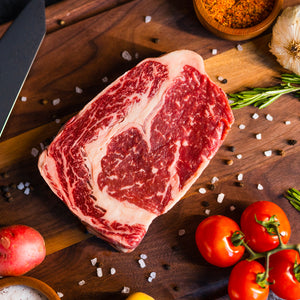
Australian Wagyu Buying Guide: Fullblood vs Purebred vs Crossbred
Oct 13, 2026
Australian Wagyu is the steak most Wagyu fans actually eat. It has serious marbling, a rich beef flavor and you can eat a full steak without it feeling like too much. But the labels can be confusing: fullblood, purebred, F1, marble score 9+. This guide explains what those words mean, which ones matter and how to pick the right Australian Wagyu for your next steak night.
Why Australian Wagyu?
Australia has one of the largest Wagyu herds outside Japan, built from Japanese bloodlines. Australian producers raise their cattle on open pasture, then finish them on grain for hundreds of days, often using rations modeled on traditional Japanese feeding. The result is beef with more marbling than USDA Prime and more classic beef flavor than Japanese A5. (Curious how it stacks up? Read A5 vs Australian Wagyu.)
Fullblood, purebred and crossbred, explained
The biggest thing on any Australian Wagyu label is how much Wagyu is in the animal:
| Label | Wagyu content | What it means |
|---|---|---|
| Fullblood | 100% | Every ancestor traces back to Japan, verified by DNA. No other breeds. |
| Purebred | 93.75% or more | Bred up from crossbreds over generations until it is nearly all Wagyu. |
| F3 | 87.5% | Third generation cross. |
| F2 | 75% | Second generation cross. |
| F1 (crossbred) | 50% | Half Wagyu, usually crossed with Angus. |
More Wagyu genetics generally means finer, more even marbling and a more buttery texture. But it is not the only thing that matters. How long the cattle are fed, what they eat and how carefully the producer selects for marbling all make a big difference. A great purebred can beat an average fullblood. For more history on the three types, see Fullblood, Purebred and F1 Wagyu.
Marble scores: what the numbers mean
Australian beef is graded by an AUS-MEAT grader who scores the marbling from 0 to 9+. A typical supermarket steak sits near the bottom of that scale. Premium Australian Wagyu usually lands between 6 and 9+.
- Marble score 6 to 7: heavily marbled, still very beefy. Great on the grill.
- Marble score 8 to 9: rich and buttery. Steakhouse luxury level.
- Marble score 9+: the top of the Australian scale. Getting close to Japanese Wagyu richness.
One note: you will sometimes see "BMS" on Australian Wagyu too. Japan's BMS scale runs from 1 to 12, so a BMS number and an Australian marble score are not the same thing. Always check which scale a seller is using.
Our three Australian Wagyu brands
Senku Purebred Wagyu: World's Best Steak 2026
Senku is raised in Queensland, is at least 93.75% Wagyu and is grain fed for 400 days on a Japanese style ration. Its program covers marble scores 6 to 9+, selected for fine, even marbling. In 2026 a Senku fillet was judged blind against more than 450 steaks from over 20 countries and named World's Best Steak at the World Steak Challenge. The Standard Meat Club brings Senku to the US. Shop Senku Wagyu, including the Senku Monsterhawk and the Senku picanha full loin.
Buy it for: the biggest occasions and the people who want the best steak in the world, full stop.
Muse Fullblood Wagyu
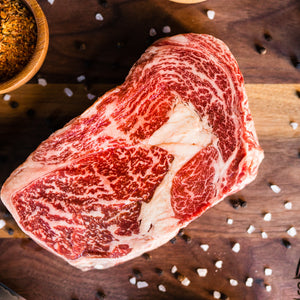
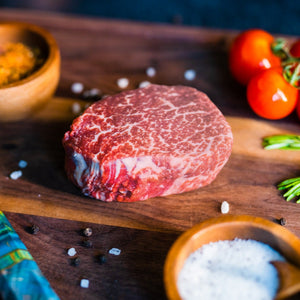
Muse is 100% fullblood Wagyu raised on pasture in Tasmania, then finished on a grain ration inspired by traditional Japanese feeding. Our Muse cuts typically grade marble score 8 to 9, so expect deep, buttery marbling with a clean beef flavor.
Buy it for: date night, a special dinner or anyone ready to step up from Prime. Start with the Muse ribeye, Muse NY strip or Muse filet mignon.
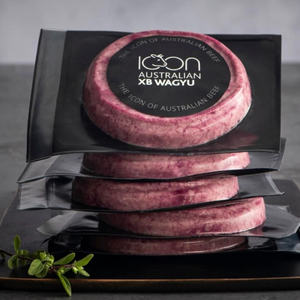
Icon Crossbred Wagyu
Icon is crossbred Wagyu raised in the New England and Darling Downs regions of eastern Australia. It delivers real Wagyu marbling at a price that works for a regular steak night, and Icon's ribeye took a gold medal at the same 2026 World Steak Challenge.
Buy it for: grilling for a crowd, weeknight upgrades and Wagyu burgers. Try the Icon ribeye, Icon NY strip or Icon Wagyu burger patties.
Which cut should you buy?
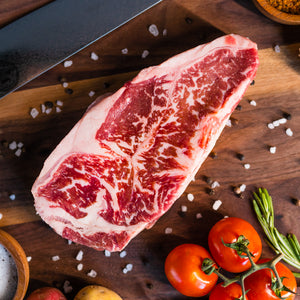
- Ribeye: the most marbling and flavor. The classic Wagyu steak.
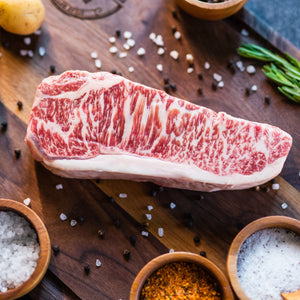
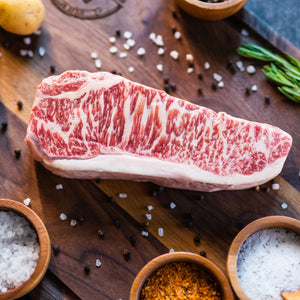
- NY strip: a little leaner with a firmer bite and a fat cap that crisps up beautifully.
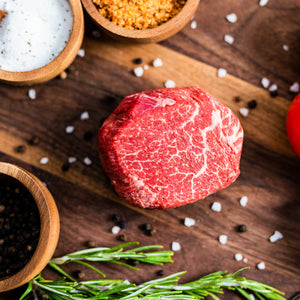
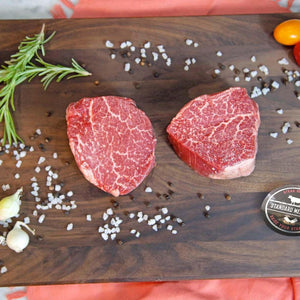
- Filet mignon: the most tender cut, and the least rich. Great for people new to Wagyu.
- Picanha: a Brazilian steakhouse favorite with a thick fat cap. Slice against the grain.
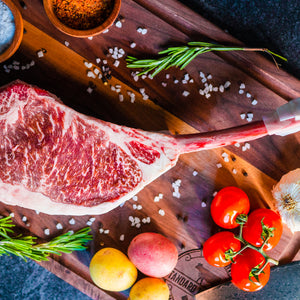
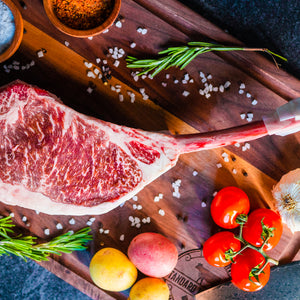
- Tomahawk and Monsterhawk: the showpiece. Big enough to feed a table.
- Denver and sirloin: the best value cuts, still well marbled.
- Burgers and ground: the easiest way to get Wagyu richness into a weeknight meal. See Brisket and Burgers.
How to cook Australian Wagyu
- Thaw in the fridge, still sealed, for about 24 hours.
- Let the steak sit out for 30 minutes and pat it dry.
- Season simply with salt and pepper. The beef does the rest.
- Sear in a ripping hot cast iron pan or over high heat on the grill.
- Pull it at medium-rare, around 130 F, and rest it for 5 minutes before slicing.
Wagyu fat renders at a lower temperature than regular beef, so it cooks a little faster. Keep an eye on it.
FAQ
Is Australian Wagyu as good as Japanese Wagyu?
It is different, not lesser. Japanese A5 is richer and best in small portions. Australian Wagyu has more beef flavor and works as a full steak. Senku winning World's Best Steak in 2026 shows the top Australian programs can compete with anyone.
Is crossbred Wagyu "real" Wagyu?
Yes. An F1 crossbred is half Wagyu and still marbles far beyond most beef. Just know what you are paying for and expect fullblood and purebred to cost more.
What marble score should I buy?
For grilling and everyday luxury, 6 to 7 is fantastic. For a special dinner, go for 8 to 9 or 9+.
How much Australian Wagyu per person?
Plan on 8 to 12 ounces per person for steaks, a little less if you are serving several sides.
Every order ships frozen from St. Louis, with free shipping on orders over $299. Shop all Australian Wagyu.