A5 Wagyu vs Australian Wagyu: Which Should You Buy?
Oct 13, 2026
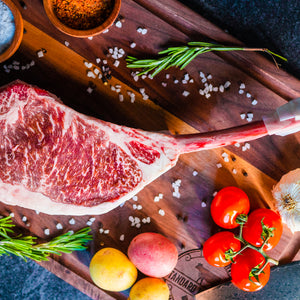
The short answer: Japanese A5 Wagyu is the most heavily marbled beef in the world. It is so rich that most people eat 3 to 4 ounces and call it the best bite of their year. Australian Wagyu is still deeply marbled, but it has a beefier flavor and you can sit down and eat a whole steak. If you want a once-in-a-while tasting experience, buy A5. If you want the best steak dinner of your life, buy Australian Wagyu.
Below is everything that actually separates the two: how each one is graded, how they taste, how much to buy per person and what you pay per ounce.
A5 vs Australian Wagyu at a glance
| Japanese A5 Wagyu | Australian Wagyu | |
|---|---|---|
| Where it comes from | Japan only. Every animal is traced from birth. | Australia, from Japanese bloodlines. |
| Genetics | 100% Japanese breeds, mostly Japanese Black. | Fullblood (100%), Purebred (93.75%+) or crossbred (50% and up). |
| How it is graded | Japanese Meat Grading Association. A5 is the top grade. | AUS-MEAT marble score from 0 to 9+. |
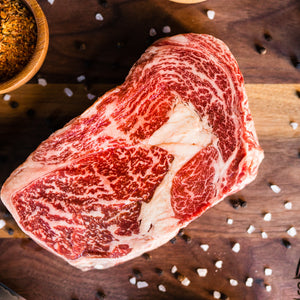
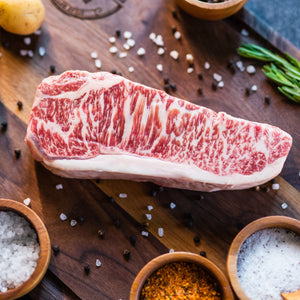
| Marbling | BMS 8 to 12 out of 12. The meat can look almost pink-white. | Usually marble score 6 to 9+ for premium programs. |
| Flavor | Sweet, buttery, melts on your tongue. | Rich and buttery with a classic beef flavor. |
| Portion per person | 3 to 4 oz. | 8 to 16 oz, like any great steak. |
| Best for | Tastings, celebrations, gifts, sharing. | Steak night, grilling, feeding a group. |
What "A5" actually means
A5 is a grade, not a breed. It comes from the Japanese Meat Grading Association (JMGA), which grades every carcass on two things:
- The letter (A, B or C) is the yield grade: how much usable meat the animal produced. "A" is the highest yield.
- The number (1 to 5) is the quality grade. It looks at four things: marbling, meat color, firmness and texture, and fat color and quality. The final number is the lowest of the four scores, so a 5 means the beef scored top marks on everything.
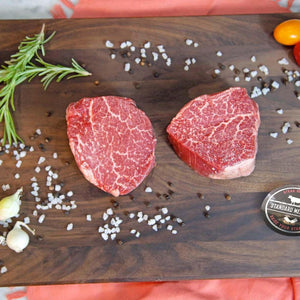
Marbling is measured on the Beef Marbling Standard (BMS), a scale of 1 to 12. To be A5, beef has to land between BMS 8 and 12. That range is wide, so two A5 steaks can look quite different. Only beef graded in Japan can be called A5. There is no such thing as "American A5" or "Australian A5."
How Australian Wagyu is graded
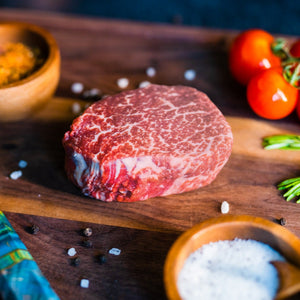
Australia uses its own system. An AUS-MEAT grader scores the marbling from 0 to 9+, with 9+ being the top of the scale. Most premium Australian Wagyu programs sit somewhere between 6 and 9+.
The other thing to know is genetics. Australian Wagyu comes in three tiers:
- Fullblood: every ancestor traces back to Japan, with no other breeds mixed in.
- Purebred: at least 93.75% Wagyu.
- Crossbred (F1 to F3): 50% Wagyu and up, usually crossed with Angus.
Higher Wagyu content usually means finer marbling, but feeding and the producer matter just as much. Our Australian Wagyu buying guide goes deeper on picking between them.
Taste and texture
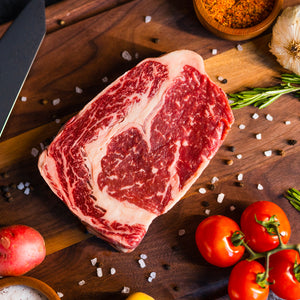
A5 is closer to a delicacy than a steak. The fat melts at a low temperature, so the meat practically dissolves. The flavor is sweet and buttery, and a little goes a long way. Eat too much and it can feel heavy.
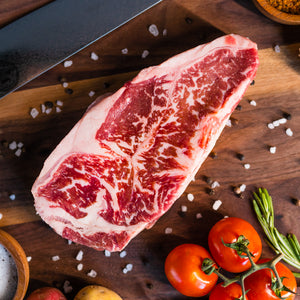
Australian Wagyu keeps more of the meaty chew and beef flavor you expect from a steakhouse ribeye, with far more marbling than USDA Prime. It is the sweet spot between rich and familiar. If you have ever thought A5 sounded like "too much," start here. (For a side by side with Prime, see USDA Prime vs Australian Wagyu.)
Price per ounce
Here is what the same cut costs across our lineup, so you can compare apples to apples:
- Miyazaki A5 Wagyu ribeye (14 oz): about $10.35 per ounce
- Muse Fullblood Wagyu ribeye (14 to 16 oz): about $5.33 per ounce
- Icon Wagyu ribeye (16 oz): about $3.56 per ounce
A5 costs more per ounce, but you eat far less of it. A 14 oz A5 ribeye can serve three or four people as a tasting course. A Muse ribeye is dinner for one or two.
How to cook each one
A5: slice it into 1 inch cubes or thin strips, get a cast iron pan very hot and sear for about 30 to 60 seconds per side. Skip the oil. Render a little of the fat in the pan first and use that. Salt lightly right before serving.
Australian Wagyu: cook it like a great steak. Let it come up from the fridge for 30 minutes, season with salt and pepper, sear hard and pull it at medium-rare (around 130 F). The extra marbling keeps it juicy even if you go a little past that.
So which should you buy?
- A once-in-a-while experience or tasting course: Japanese A5 Wagyu.
- Steak night for two to six people: Australian Wagyu, especially Muse ribeye or NY strip.
- The best steak money can buy right now: Senku Purebred Wagyu, which won World's Best Steak at the 2026 World Steak Challenge.
- A gift for someone who has everything: A5, or a box from our Holiday Gift Guide.
- Can't decide: grab a sampler from Boxes and Samplers and taste them side by side.
FAQ
Is Australian Wagyu real Wagyu?
Yes. Australian Wagyu comes from Japanese Wagyu genetics. Fullblood Australian Wagyu has no other breeds in its lineage at all. The difference is where it is raised and how it is graded.
Can Australian Wagyu be A5?
No. A5 is a Japanese grade and only applies to beef graded in Japan. Australian Wagyu uses the AUS-MEAT marble score instead, where 9+ is the top.
How much A5 Wagyu per person?
Plan on 3 to 4 ounces per person, or 2 ounces if it is one course in a bigger meal.
Is A5 Wagyu worth it?
If you want to taste the most marbled beef in the world at least once, yes. For a regular steak night, Australian Wagyu gives you more steak for the money.
Every order ships frozen in insulated packaging from St. Louis, with free shipping on orders over $299. Shop Japanese A5 or Australian Wagyu.